
Radiofrequency Skin Tightening Singapore: Benefits, Cost, and Treatment Guide

One non-surgical option that has gained popularity in Singapore for individuals seeking to tighten their skin without undergoing surgery is radio frequency skin tightening. Unlike invasive procedures, this treatment focuses on gradual, natural-looking improvements rather than dramatic, immediate changes, making it especially appealing to those who want subtle enhancement without downtime.
This article will provide you with a detailed overview of what radiofrequency skin tightening entails, what you can expect from the treatment, how much it will cost you in Singapore, and whether it is the right choice for you.
What Is Radiofrequency Skin Tightening?
Radiofrequency skin tightening is a cosmetic, non-surgical procedure that uses heat energy to tighten the skin by stimulating collagen and elastin synthesis in the deeper layers of skin.
Collagen is a structural protein that is responsible for keeping our skin firm and lifted. However, production of collagen decreases gradually as people age, leading to the skin becoming saggy, developing wrinkles and becoming less elastic. The RF technology triggers this by inducing collagen synthesis in the dermis (deeper skin layer) via heat, thus stimulating skin rejuvenation naturally.
Clinical insight: Dermatology studies have shown that controlled dermal heating in the range of 40°C – 45°C can stimulate neocollagenesis (new collagen formation), which is the primary mechanism behind RF skin tightening results.
While RF can penetrate deeper layers effectively, some advanced laser technologies (such as fractional lasers) can also reach similar depths depending on settings. However, RF is generally preferred for skin laxity, whereas lasers are more suited for surface-level concerns like pigmentation.
Common treatment areas include:
- Face (cheeks, jawline, under-eye area)
- Neck
- Abdomen
- Thighs
- Arms

How Does RF Skin Tightening Work?
Throughout the skin tightening process, a special device will be used to provide a controlled amount of radiofrequency energy into the skin, which heats it to a temperature between 38 °C and 42 °C.
This stimulates two main effects in the skin:
- Immediate collagen contraction, which produces a subtle tightening effect
- Long-term remodelling of collagen, which, over time, enhances firmness and elasticity
Most patients begin noticing visible improvements within 4 to 8 weeks, with continued enhancement over 2 to 3 months as collagen rebuilds.
Expert perspective: Aesthetic practitioners in Singapore often emphasise that results depend heavily on consistent treatment sessions and correct energy settings, which must be tailored to the patient’s skin thickness and condition.
Benefits of RF Skin Tightening
RF skin tightening is becoming increasingly popular, as it produces noticeable and desired results without having to undergo a surgical process.
Some of its main benefits include:
- Gradual and natural skin tightening
- Reduction of fine lines and wrinkles
- Improved texture and tone
- No downtime required
- Suitable for both facial and body procedures
- Compatible with most skin tones
Practical insight: It is most effective for individuals with mild to moderate skin laxity. Patients with severe sagging may achieve better outcomes with treatments like HIFU or surgical options.
What Results Can You Expect?
One of the most common misconceptions about RF is that it gives immediate results like fillers and a facelift.
Actual Results Timeline:
- Mild results may be seen shortly after treatment
- Visible results will be seen after 4-8 weeks
- Full results will be seen after a course of multiple sessions
Body areas such as the abdomen and thighs may take longer due to thicker skin and larger treatment zones.
For most clinics in Singapore, a course of 4 to 6 sessions is recommended, followed by maintenance sessions.
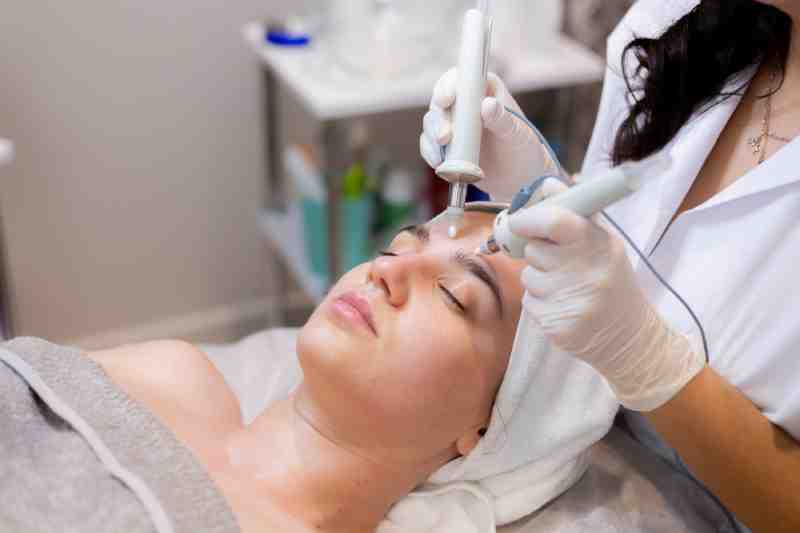
RF Skin Tightening for Face vs Body
RF treatments can be adjusted depending on the area that is being treated.
For the face:
For the face, it is typically used to tighten loose skin around the cheeks, jawline, and under the eyes. It is also being used more and more as a preventative measure against early signs of ageing.
For the body:
It is typically used to tighten loose skin around the abdomen, thighs, and arms. This treatment is typically used after weight loss and pregnancy. For areas such as the thighs and stomach, the results may take a little longer to show, but are effective with consistent sessions and proper treatment planning.
Thermage and Other RF Technologies
Several RF technologies exist in Singapore, and they vary in intensity and efficacy.
Thermage (Monopolar RF):
This is a well-known system that targets deeper tissues and is typically done in a single session.
This system is more expensive but longer lasting.
Bipolar and Multipolar RF:
These are more affordable and typically require a course of treatment in multiple sessions for optimal results.
However, a skilled practitioner will be able to advise you on what will be most effective for your skin type and condition and not what is best in general.
Clinical note: Device selection significantly affects outcomes. Monopolar systems penetrate deeper, while multipolar devices are more surface-level and require cumulative sessions.
How Often Should You Do RF Skin Tightening?
The number of sessions will depend on what type of equipment is used and what your desired outcome is.
General guidelines:
- Clinic treatments: every 2–4 weeks
- Initial course: 4–6 sessions
- Maintenance: every 3–6 months
- At-home devices: 1–3 times per week
Consistency plays a major role in achieving and maintaining results.
Cost of Skin Tightening in Singapore
This cost will vary depending on the area you would like to treat and the treatment you are receiving:
RF Skin Tightening
- Standard RF treatments: SGD $300 – $800 per session
- Package pricing (4-6 sessions): SGD $1,200 – $3,000 total
- Entry-level RF: from ~SGD $200+ per session
Premium RF (Thermage & Monopolar RF)
- Face: SGD $2,000 – $4,500 per session
- Eyes: SGD $1,600 – $3,800
- Body areas: SGD $5,500 – $8,000
HIFU Cost Comparison
- Per session: SGD $600 – $1,800
- Full face: SGD $1,800 – $3,000+
RF is the most cost-effective entry point, while Thermage and HIFU are investment treatments with longer-lasting outcomes.
At-Home RF Devices: Are They Worth It?
The trend of having in-home RF devices has been on the rise, as they are convenient and cost-effective. However, they operate on significantly lower energy levels and are not on par with the clinical treatments.
Pros:
- Cost-Effectiveness
- Convenient for regular use.
- Useful for Maintenance
Cons:
- Less powerful, so results are slower and more subtle
- Require consistent, long-term use
- Cannot replace professional treatments
Best used as a maintenance tool, not a primary treatment.
Is RF Skin Tightening Permanent?
RF skin tightening is not permanent, as it does not stop the natural ageing process.
Typical longevity:
- Standard RF treatments: 6–12 months
- Advanced treatments (e.g., Thermage): up to 12–18 months
Maintenance sessions are necessary to sustain results over time.
Safety, Risks, and Considerations
RF skin tightening is generally considered safe when performed by trained professionals.
Possible side effects:
- Mild redness or swelling
- Temporary sensitivity
- Rare risk of burns if improperly performed
RF energy used in cosmetic treatments is non-ionising, meaning it does not damage DNA and is not linked to cancer risk.
However, individuals with:
- Pacemakers
- Metal implants
- Certain medical conditions
should consult a qualified doctor before undergoing treatment.
Medical reassurance: RF uses non-ionising radiation, which does not damage DNA and is not associated with cancer risk, according to established dermatological safety data.
RF Skin Tightening vs Laser: Which Is Better?
Both treatments improve skin quality but target different concerns.
RF Skin Tightening:
- Works deeper in the skin
- Best for sagging and laxity
- Minimal downtime
Laser Treatments:
- Target surface-level concerns
- Better for pigmentation and texture
- Downtime varies depending on intensity
HIFU Treatments:
- Targets deeper structural layers
- Best for lifting and contouring
- Stimulates collagen production at deeper levels
- Minimal downtime
| Feature | RF Skin Tightening | Laser Treatments | HIFU (High-Intensity Focused Ultrasound) |
| Depth of penetration | Dermis (mid-deep skin layers) | Surface to mid dermis | SMAS layer (deep structural layer) |
| Best for | Skin laxity, mild sagging, texture | Pigmentation, resurfacing, texture | Lifting, contouring, deeper sagging |
| Downtime | Minimal to none | Can vary (mild to moderate) | Minimal (slight redness) |
| Skin types | Suitable for most skin tones | Some lasers limited by skin tone | Safe for most skin types |
| Treatment frequency | Multiple sessions (4–6) | Depends on type | Usually 1 session annually |
| Results timeline | Gradual (4–12 weeks) | Varies | Gradual (2–3 months) |
In many cases, clinics combine both treatments for more comprehensive results.
How to Choose the Right Clinic in Singapore?
- Look for clinics with licensed medical doctors or certified aesthetic practitioners
- Look for FDA-approved or CE-marked devices
- Look for case studies of patients with similar problems
- Look for a consultation before treatment
- Be wary of clinics with extremely low pricing
TIP: Clinics that offer customised treatment plans tend to have higher success rates than those that offer generic packages.
Questions to Ask Before Your Session
- What type of RF technology is being used?
- How many sessions will I need for my condition?
- What results can I realistically expect?
- Are there any risks based on my skin type or medical history?
- Who will perform the procedure, and what is their experience?
Asking these questions helps you avoid ineffective treatments and ensures better outcomes.
Red Flags to Avoid
- Be wary of clinics with exaggerated claims
- Be wary of no consultation or skin assessment
- Be wary of no explanation of the device and treatment plan
- Be wary of extremely low pricing
- Be wary of unqualified practitioners
These are all common traits of low-quality treatment and/or unprofessional practices.
Is RF Skin Tightening Right for You?
RF skin tightening is a strong option if you:
- Have mild to moderate skin laxity
- Prefer gradual, natural improvements
- Want to avoid surgery or injectables
- Can commit to multiple sessions
It may not be the best choice for individuals with severe sagging, where surgical options could be more effective.
Closing Words
It’s a middle ground between skincare and surgical interventions, and while it does require dedication and patience, the results are worthwhile.
If you’re considering RF or HIFU treatments in Singapore, the most important step is not choosing the device; it’s choosing the right practitioner. A one-on-one consultation can determine the exact energy settings, technology, and treatment plan your skin actually needs.
Book a consultation with a qualified aesthetic clinic to get your skin rejuvenation treatment.
FAQs
What is RF skin tightening?
It is a non-invasive procedure that uses radiofrequency technology to tighten the skin.
How long does RF skin tightening take to work?
It starts showing visible changes in 4-8 weeks, with the final results showing in 8-12 weeks.
How much does RF skin tightening cost in Singapore?
It costs between SGD 200 to SGD 1,000 per session, depending on the area, whereas Thermage ranges from SGD 2,500 to SGD 5,000+.
How many sessions are needed?
You need 4-6 sessions for the best results.
How long do the effects last?
It lasts anywhere from 6-18 months, depending on the procedure.
Can RF skin tightening be done at home?
It can be, but the effects are minimal, and the procedure is just maintenance.